
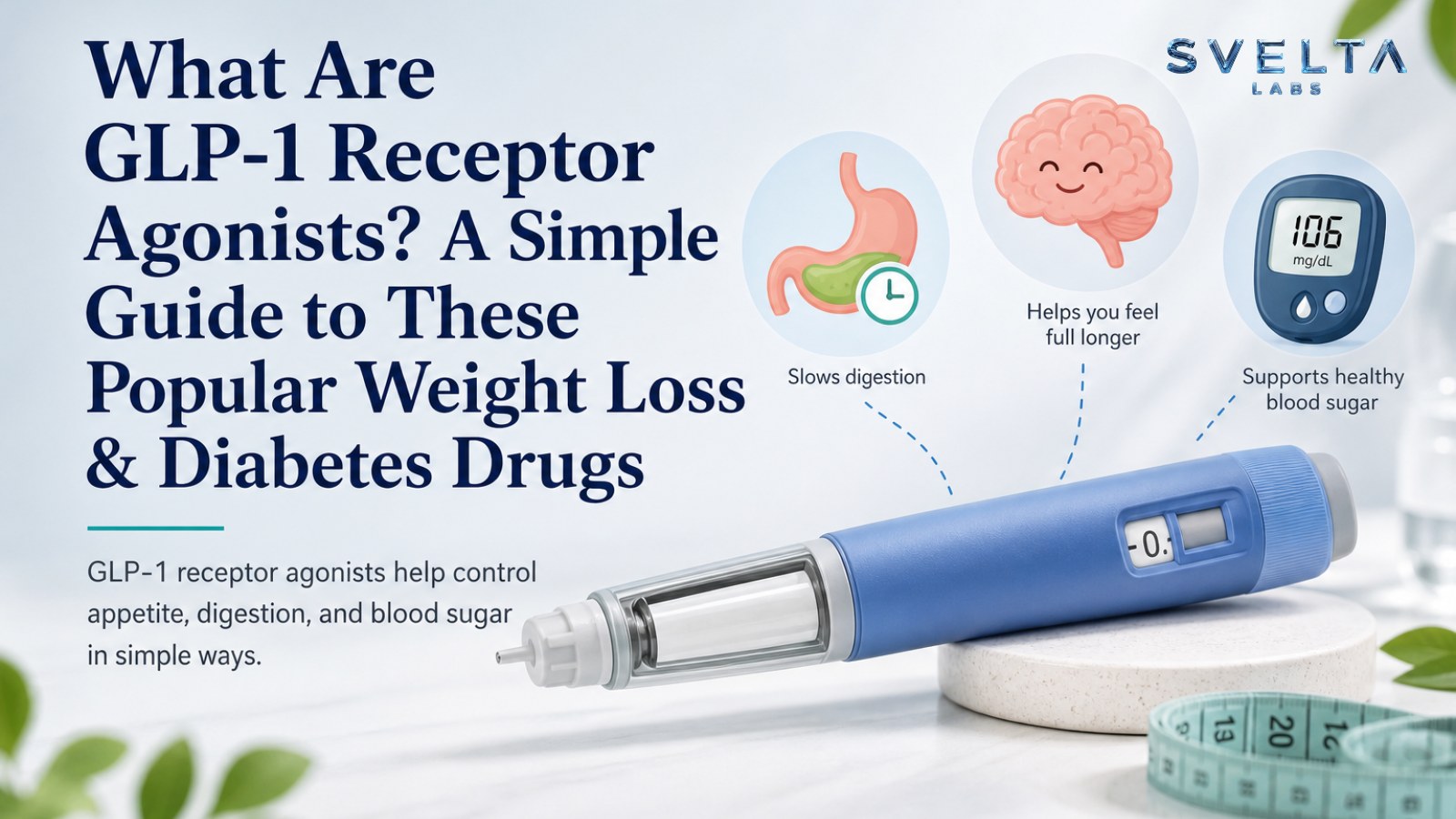
GLP-1 receptor agonists are prescription medicines that imitate glucagon-like peptide-1, a hormone involved in blood sugar regulation and appetite. Some are licensed for type 2 diabetes, some for weight management and some brands have different approved uses despite sharing an active ingredient.
What does GLP-1 mean?
GLP-1 stands for glucagon-like peptide-1. It’s a natural hormone your body produces after you eat. This hormone helps your body manage blood sugar levels and controls how full you feel. GLP-1 receptor agonists are medicines designed to copy this hormone’s effects.
How GLP-1 receptor agonists work
- They help you feel full for longer, reducing hunger.
- They slow down digestion, so food moves through your stomach more slowly.
- They help lower blood sugar levels by encouraging your body to release insulin when needed.
- They reduce cravings and the desire to eat more.
Examples: semaglutide, liraglutide and related medicines
Semaglutide appears in several brands, including Ozempic and Wegovy; liraglutide is another GLP-1 receptor agonist. The brand, formulation and indication matter: a diabetes medicine is not automatically licensed for weight management. Tirzepatide, sold as Mounjaro in the UK, acts at both GIP and GLP-1 receptors and is more precisely described as a dual agonist. The MHRA guide to licensed GLP-1 medicines explains the distinctions.
Blood sugar control and weight management
GLP-1 receptor agonists are popular because they offer a way to support blood sugar control and help with weight management. For many people with type 2 diabetes, these drugs can make managing the condition easier. They’re also gaining attention for their ability to assist with weight loss when combined with diet and exercise.
Why treatment results differ
Studies report average changes in weight and blood sugar across particular groups. Those averages differ by medicine, indication, study duration and participants, so there is no single expected result for the whole GLP-1 class. Clinical support and follow-up remain part of treatment.
Injections and tablets are not interchangeable
GLP-1 medicines are available in different formulations, including injections and tablets. Their instructions differ. A change of brand, route or schedule needs the prescriber’s guidance rather than a direct dose conversion based on a headline.
Common Side Effects and Cautions
Nausea and other digestive symptoms are common, but adverse effects are not always mild. The relevant patient leaflet explains the medicine’s particular risks and when to seek help. For a focused discussion, see GLP-1 weight-loss medication side effects.
Approved medicines and continuing research
Researchers continue to investigate these pathways and new uses. Existing licensed medicines and investigational peptides should be evaluated separately: evidence for one molecule or formulation does not validate another.
More science explainers and Svelta Labs information are available at https://sveltalabs.com.
Research-use disclaimer: This article is for educational purposes only and does not provide medical advice. GLP-1 receptor agonists are prescription drugs and should only be used under medical supervision.
Sources
MHRA: GLP-1 medicines for weight loss and diabetes: https://www.gov.uk/government/publications/glp-1-medicines-for-weight-loss-and-diabetes-what-you-need-to-know/glp-1-medicines-for-weight-loss-and-diabetes-what-you-need-to-know.