
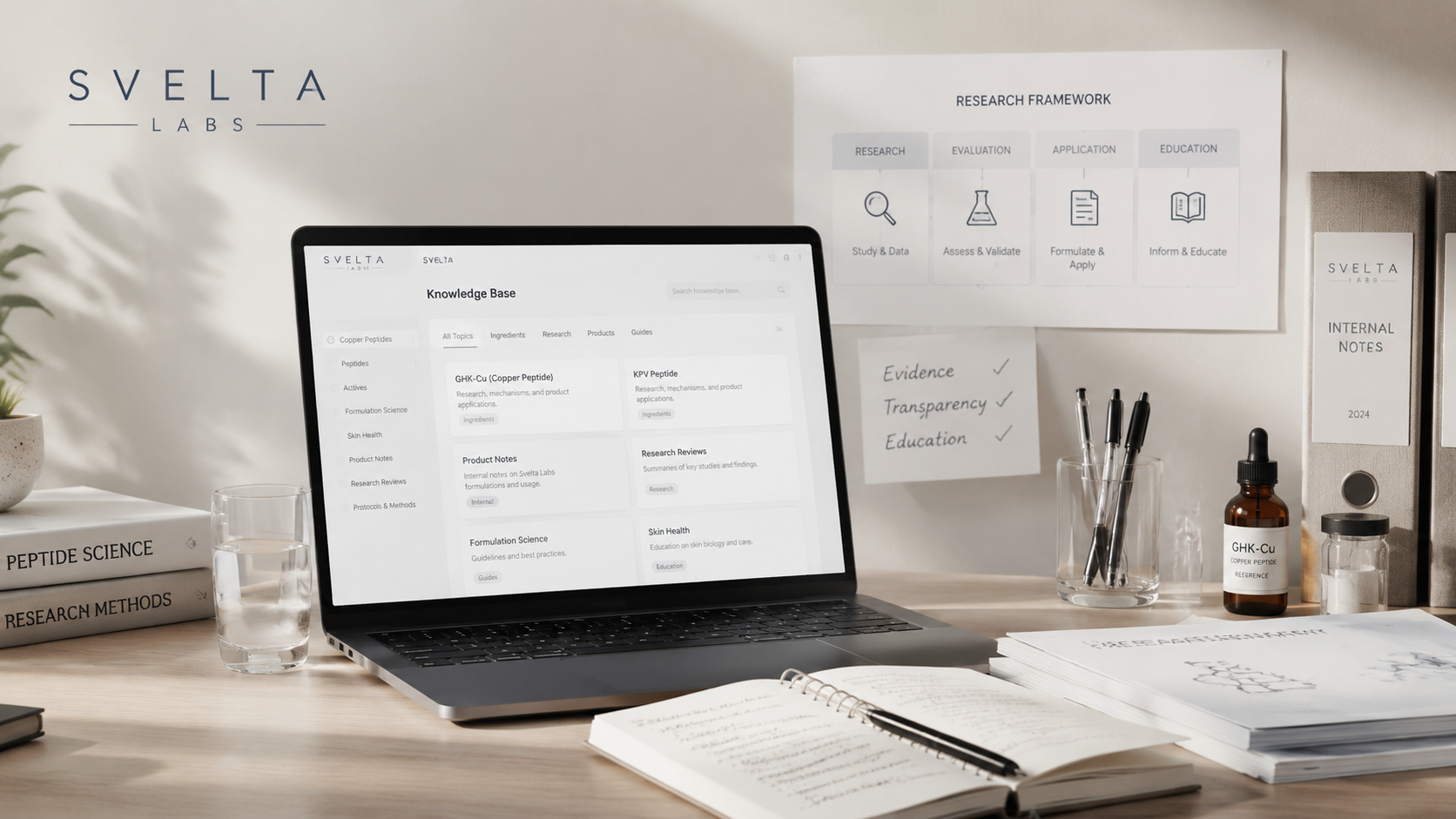
Svelta-GPT can be a starting point for peptide research questions, but an AI answer still needs checking against the source. A useful question asks for a specific compound, topic or product page rather than a personalised treatment recommendation.
What makes a useful peptide knowledge base?
Articles, PDFs and product notes are easier to search when they have descriptive headings and short sections. Compound names, publication dates and the type of evidence should stay attached to the information. A cell experiment, a clinical trial and a seller's product description should remain distinguishable.
This is the editorial aim for Svelta's education material. It is not a claim that every document or new article has already been added to an AI index, or that an answer is automatically current.
Ask questions that can be checked
- Where is the current product page for this exact compound?
- Does this source describe laboratory research or a study in people?
- What ingredients does the current listing name?
- Which parts of this answer are uncertain, and where can I read the source?
Use the original page to confirm details
Availability and specifications can change. Open the linked catalogue entry rather than relying on a remembered price or summary. A nickname should not replace the ingredient list, and a scientific mechanism does not establish a product's clinical benefit.
You can explore terminology in the peptide library and ask follow-up questions through Svelta-GPT. Personal medical decisions belong with an appropriately qualified healthcare professional. The Svelta Labs website provides the wider education and navigation context.