
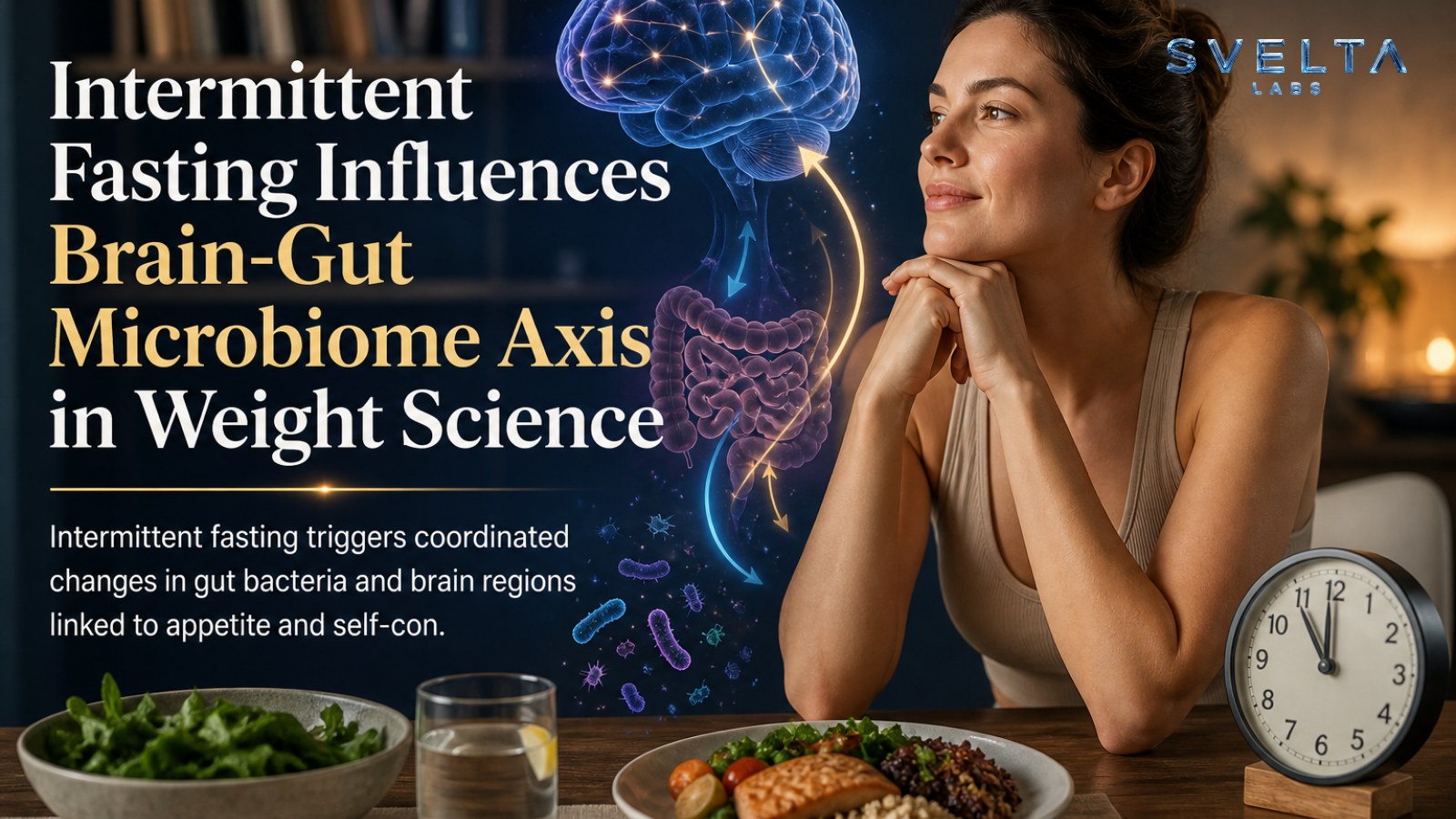
How does intermittent fasting relate to the gut microbiome and appetite? The answer involves more than calories: researchers are investigating changes in gut bacteria alongside brain activity during weight loss. A small study offers a useful example of that work, with limits that matter when interpreting its results.
In Zhou and colleagues’ 2023 study, 25 adults with obesity in China who lost weight during a two-month intermittent energy restriction (IER) intervention underwent brain imaging and stool analysis. IER alternates periods of restricted and normal energy intake; this study should not be treated as evidence for every fasting schedule.
Participants lost weight and showed changes in several metabolic measurements during the intervention. The study followed selected participants through dietary phases, rather than randomly assigning comparable groups to establish whether fasting itself caused the brain and microbiome findings.
Gut microbiome changes alongside brain activity
Functional MRI identified changes in regions involved in appetite, cognitive control and emotion. Stool analysis also found changes in microbial abundance, including Faecalibacterium prausnitzii and Parabacteroides distasonis, with lower Escherichia coli abundance. Brain scans do not directly demonstrate improved self-control or reduced cravings.
The researchers found correlations between some microbial changes and activity in particular brain regions. This supports further investigation of the brain–gut relationship, but does not identify which change came first or prove that one caused the other.
What this intermittent fasting study cannot tell us
The small sample, short follow-up and lack of a randomised comparison limit what can be concluded. Weight change, food composition and energy restriction occurred together. The findings do not establish that increasing a named bacterium causes weight loss, or that the results apply to everyone considering fasting.
Future work needs to separate the effects of meal timing, total intake and diet composition, and then test whether microbial changes alter meaningful health outcomes. That is a different question from simply detecting a change in a stool sample.
More science explainers and Svelta Labs information are available at https://sveltalabs.com.
This article explains a research study, not a fasting plan. People taking diabetes medicines or with conditions that make restricted eating risky should discuss dietary changes with their clinical team.
Sources
Zhou and colleagues: Dynamical alterations of brain function and gut microbiome in weight loss, 2023: https://www.frontiersin.org/articles/10.3389/fcimb.2023.1269548/pdf.